
Economy & Land Management
Taking Notice to Take Action: Integrating Environment, Community, and Health A Health in the Watershed Atlas of the Battle River and Sounding Creek Watersheds
Introduction
Water for Life: Alberta’s Strategy for Sustainability emphasizes our shared responsibility to ensure a healthy, secure and sustainable water supply for our communities, environment and economy. The latest state of the watershed report provides a snapshot of land use and natural assets highlighting opportunities for planning and conservation to protect water quality, water availability, and biodiversity.
 Ecosystem Services
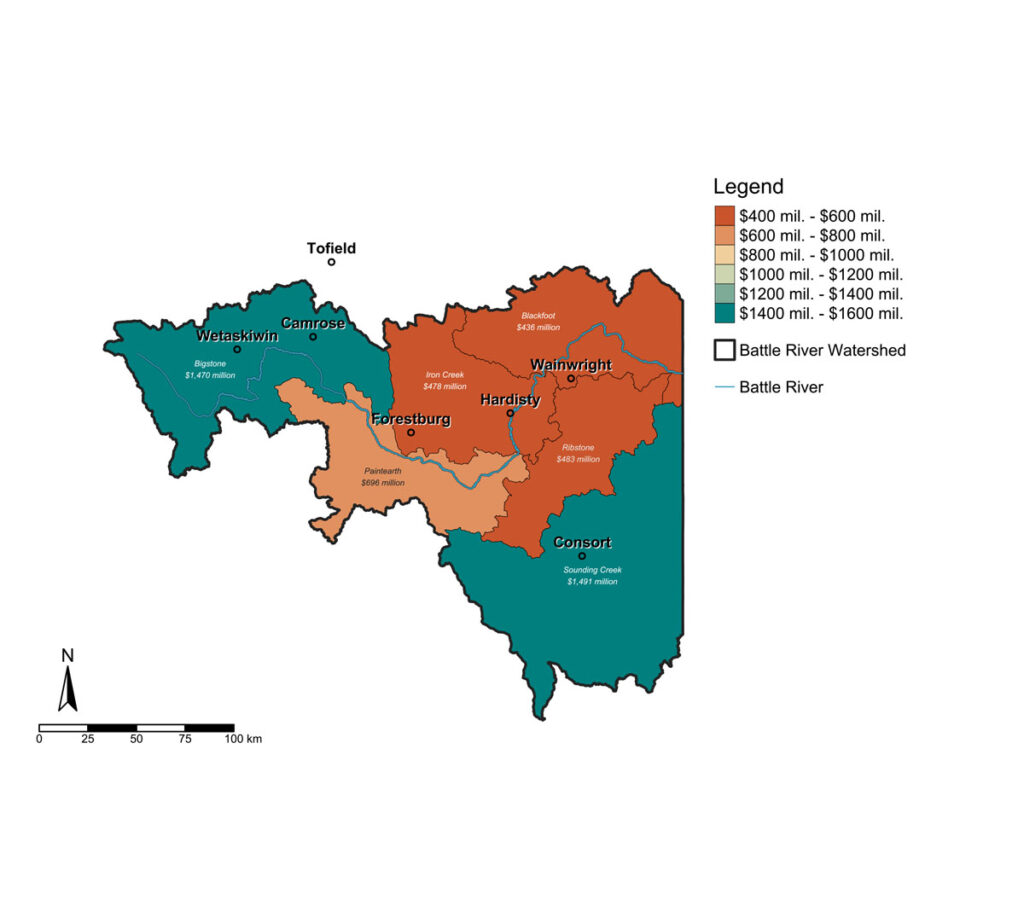
Ecosystem services have an estimated value of $5.1 billion dollars in the Battle River and Sounding Creek Watersheds, representing about 35% of the value of the region’s total economic activity. These services refer to the benefits provided by natural assets. For example, wetlands, stream banks lined with native vegetation, healthy tree stands, and intact grasslands contribute to water filtration, flood and drought control, wildlife habitat, and climate regulation.
Land Cover
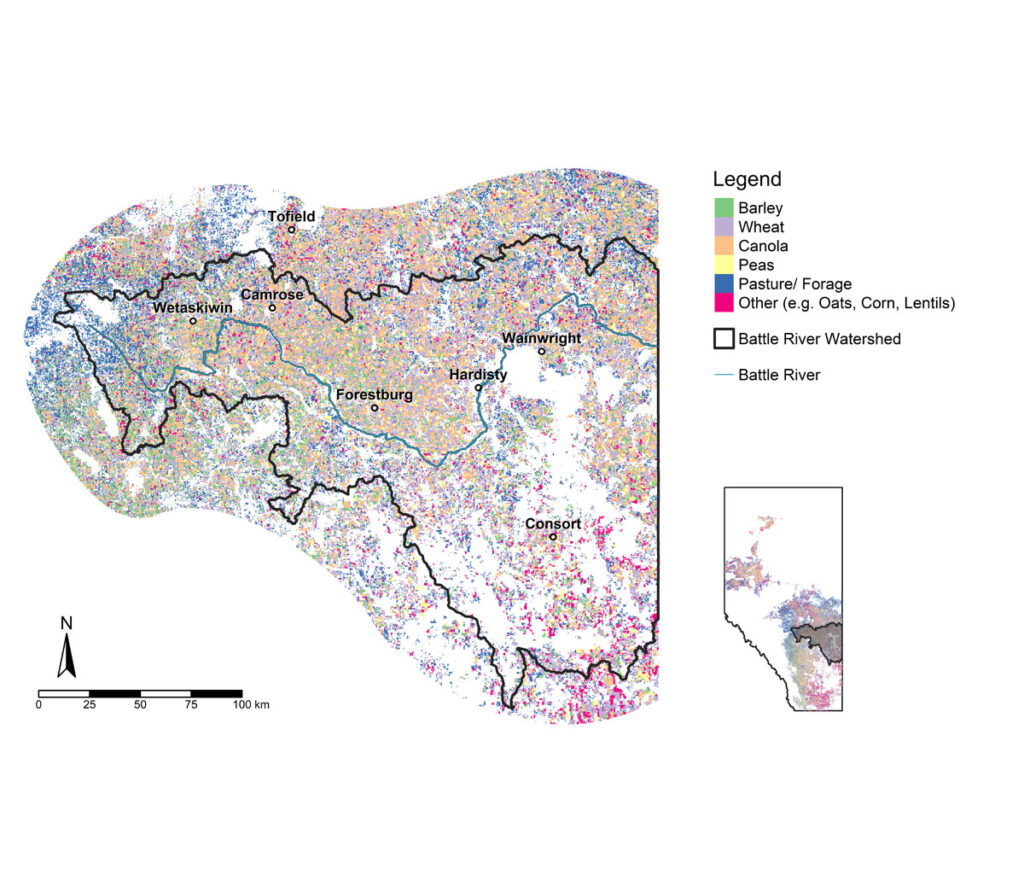
Agriculture is the predominant land use within these watersheds, varying from 54–77% of the land cover by subwatershed in 2018, with the majority of this agricultural area used to grow wheat and canola. There is also linear development such as roads and railways; industrial, commercial, and residential land use; and protected natural areas that contribute to the economy.
Learn more about land cover in the Riparian Area Assessment of the North Saskatchewan & Battle River Watersheds at www.riparianresourcesab.info/resources
 Land Management
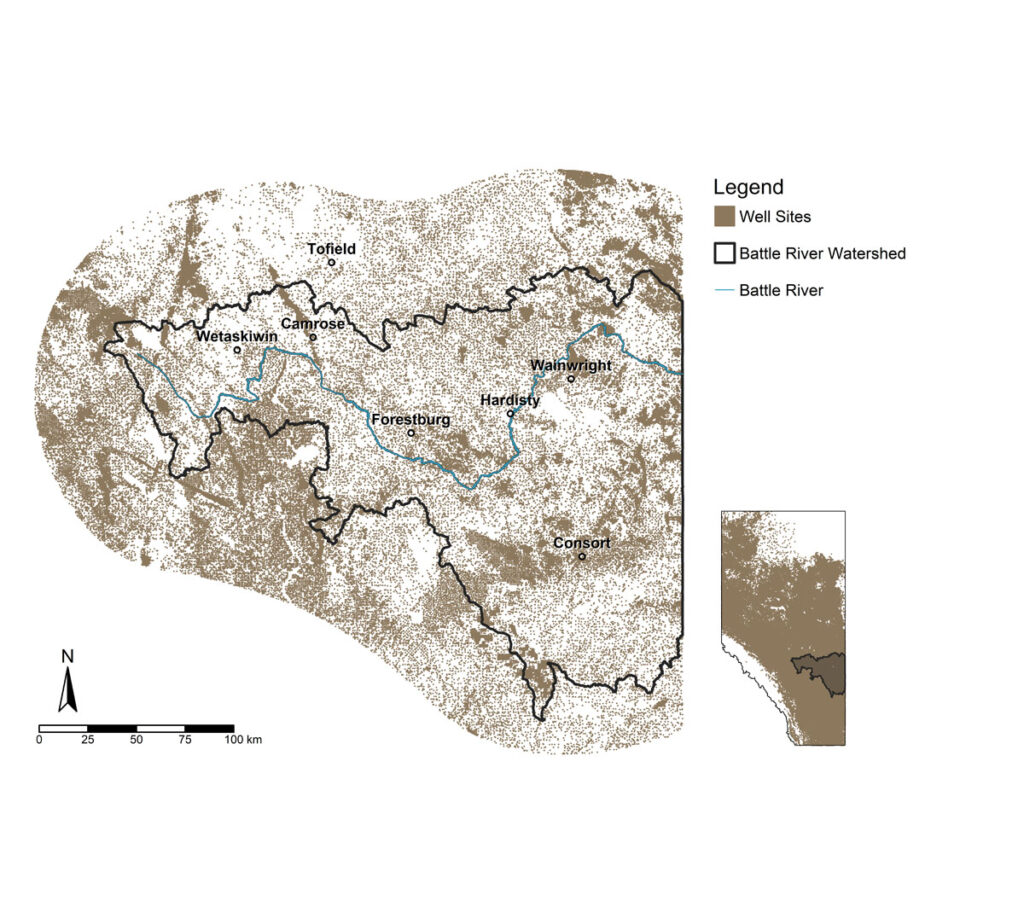
All land use requires planning and beneficial management practices to protect ecological assets. The provincial Land-use Framework informs the management of public and private lands in Alberta, seeking to balance land conservation and economic development.
Human footprint data is available at orb.abmi.ca
Water Use
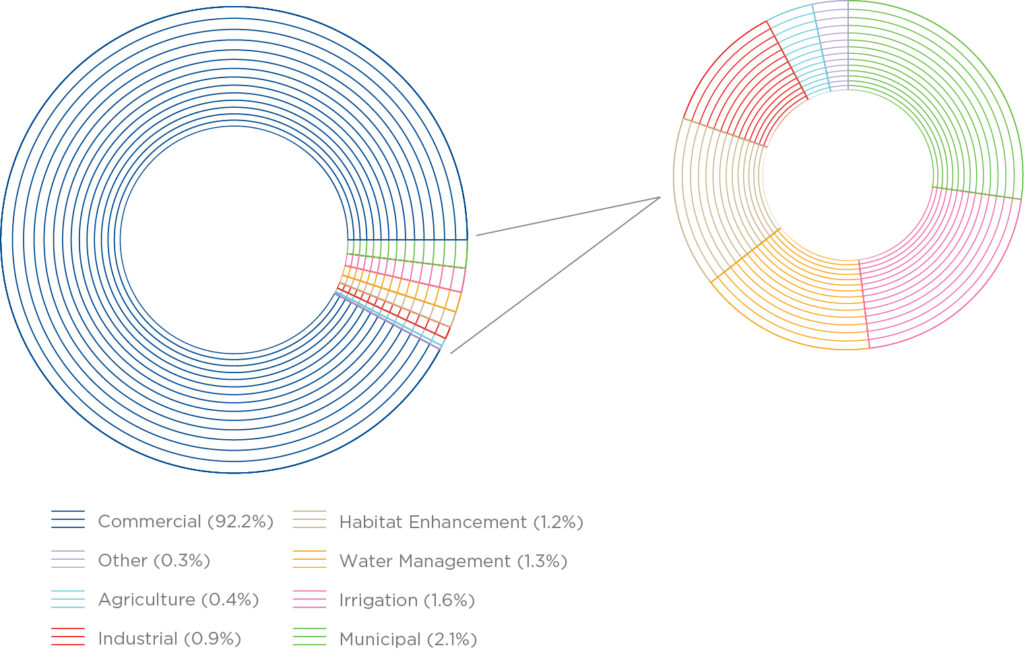
A goal of Water for Life is to provide reliable water supplies for a sustainable economy. As such, water usage is monitored as an important indicator of economic, ecological, and community health in the Battle River and Sounding Creek Watersheds.

Connect the dots
How does this affect the rest of watershed health?

 Wetlands Inventory
Visit Water
Wetlands Inventory
Visit Water

 Fish Health
Visit Biodiversity
Fish Health
Visit Biodiversity

 Water Quantitiy
Visit Water
Water Quantitiy
Visit Water
 Riparian Health
Visit Biodiversity
Riparian Health
Visit Biodiversity
- Land management decisions affect ecosystem health, water supply, and economic activity, all of which are interrelated.
- Water quantity impacts and is impacted by our human footprint.
- Economic wellbeing influences the resilience of communities and their ability to engage in social and environmental initiatives.
Call to Action
- Conserve and restore wetlands to reduce the impacts of flood and drought
- Maintain healthy tree stands to provide habitat and reduce heat island effects
- Cap and reclaim abandoned water wells
Acknowledging Lands and People
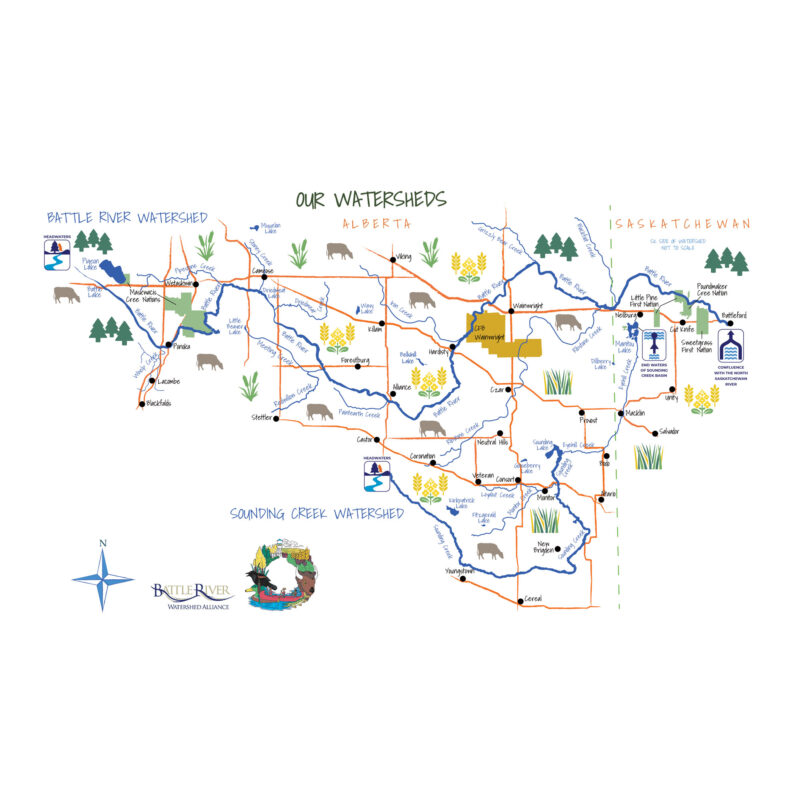
The Battle River and Sounding Creek watersheds have been the home, meeting ground and travelling route for many Indigenous Peoples since time immemorial. We gratefully acknowledge the ancestral territory and ongoing presence of Indigenous Peoples and Nations within these watersheds. Their experiences, teachings, knowledge and wisdom inform and enrich our collective efforts to care for the land and water of this region. These watersheds are located in Treaty 6 and 7 territory and the Métis homeland. Fulfilling the spirit and intent of the treaties is an ongoing process, and the Battle River Watershed Alliance is committed to building strong and respectful relationships with the Indigenous Peoples of this land, with all living beings, and with the land and water on which we all depend.