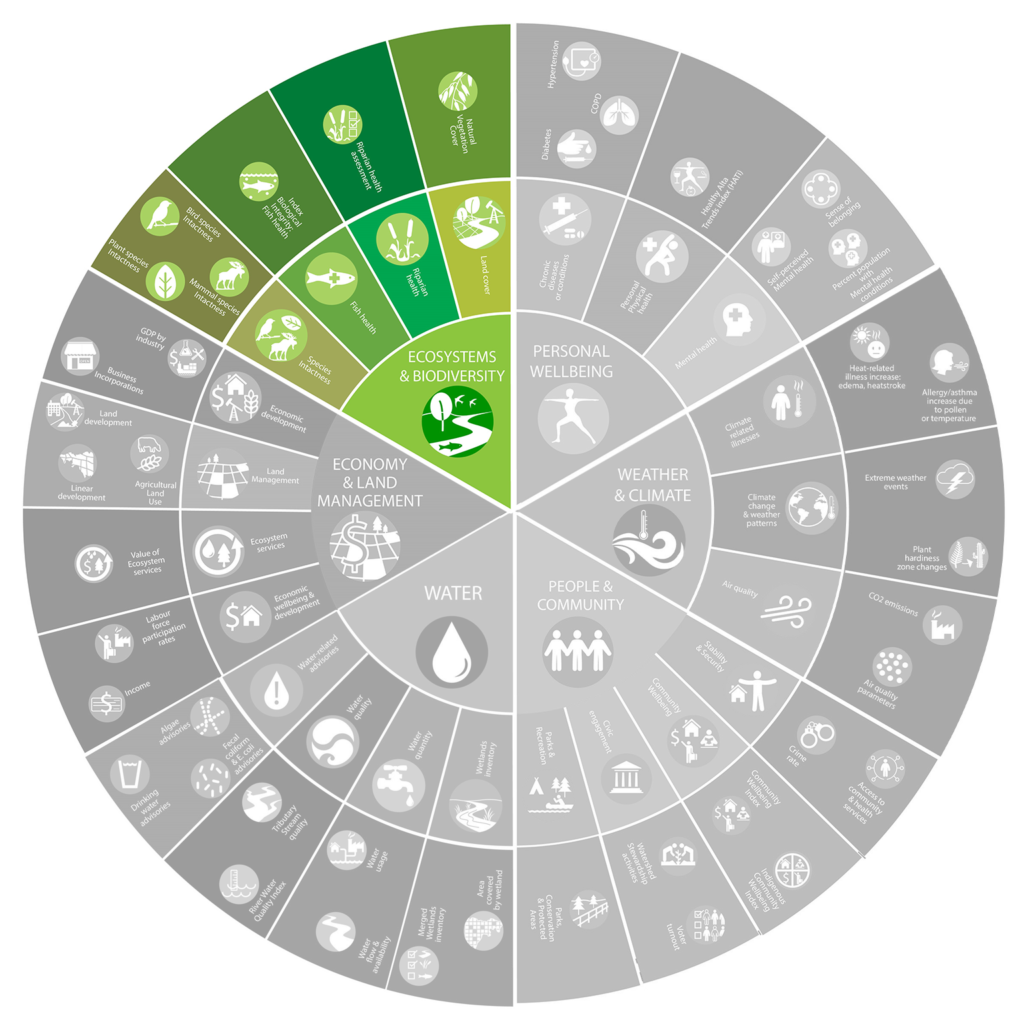
Ecosystems & Biodiversity
Taking Notice to Take Action: Integrating Environment, Community, and Health A Health in the Watershed Atlas of the Battle River and Sounding Creek Watersheds
Introduction
Ecosystems are the interactions between species and their environments in a given geographic area. Ecosystem services sustain the planet, fueling the economy and our communities. The Health in the Watershed Atlas offers the latest information on the state of ecosystems and biodiversity to inform stewardship actions for land holders, municipalities, Indigenous communities, businesses, and industry.
Land Cover & Species Intactness
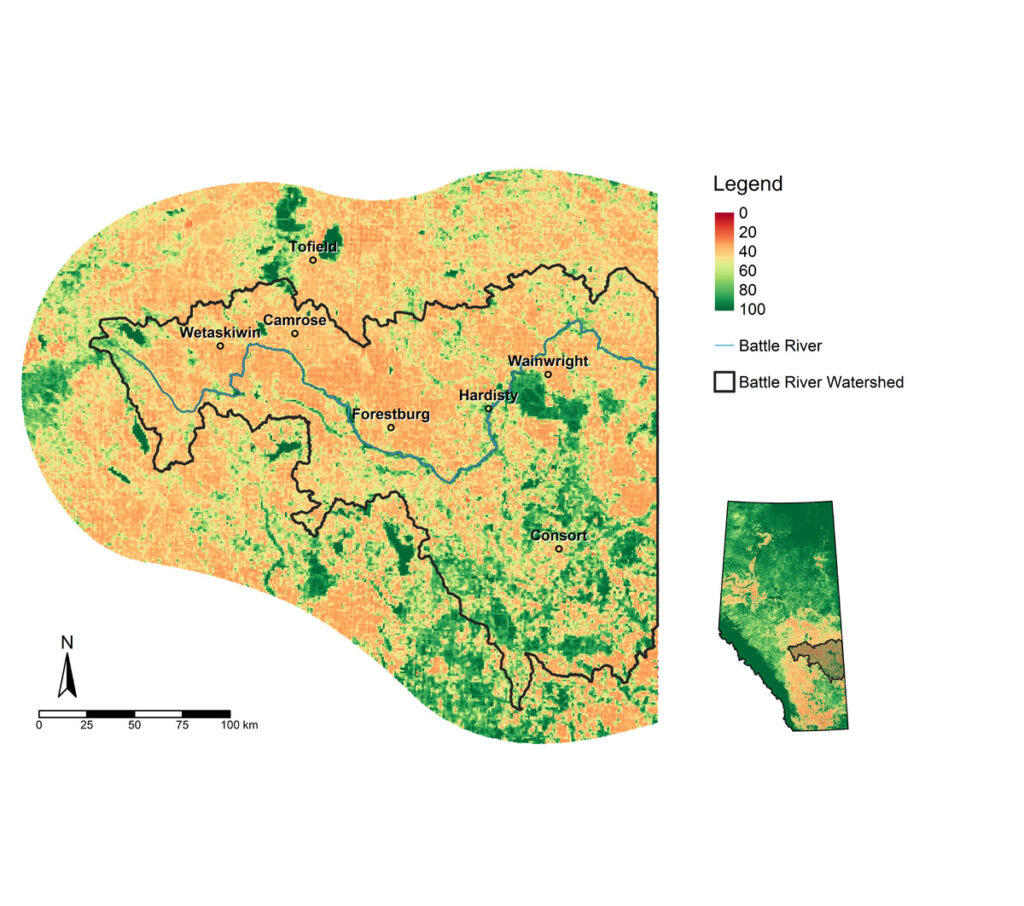
The health and diversity of wildlife, birds, fish, and other species are closely linked to land use, development, and changes in climate. Areas in green on the map below indicate less human disturbance and a greater intactness of native plant species. In these areas, pastureland and
grazing are common. Other land uses such as cropland, linear developments (e.g. roads and railways), industry, and urban development can negatively impact biodiversity. Agriculture accounts for about 65% of land cover within our watersheds.
The overall intactness of 336 native plant species was found to be 46% on average, as measured by the Alberta Biodiversity Monitoring Institute (ABMI) Biodiversity Intactness Index. Changes in climate may also affect plant hardiness zones and the ability of both native and invasive species to survive in this region.
Bird Health
The 2024 State of Canada’s Birds Report shows the drastic decrease in grassland bird species across Canada. The health of bird populations is often shaped by habitat loss and
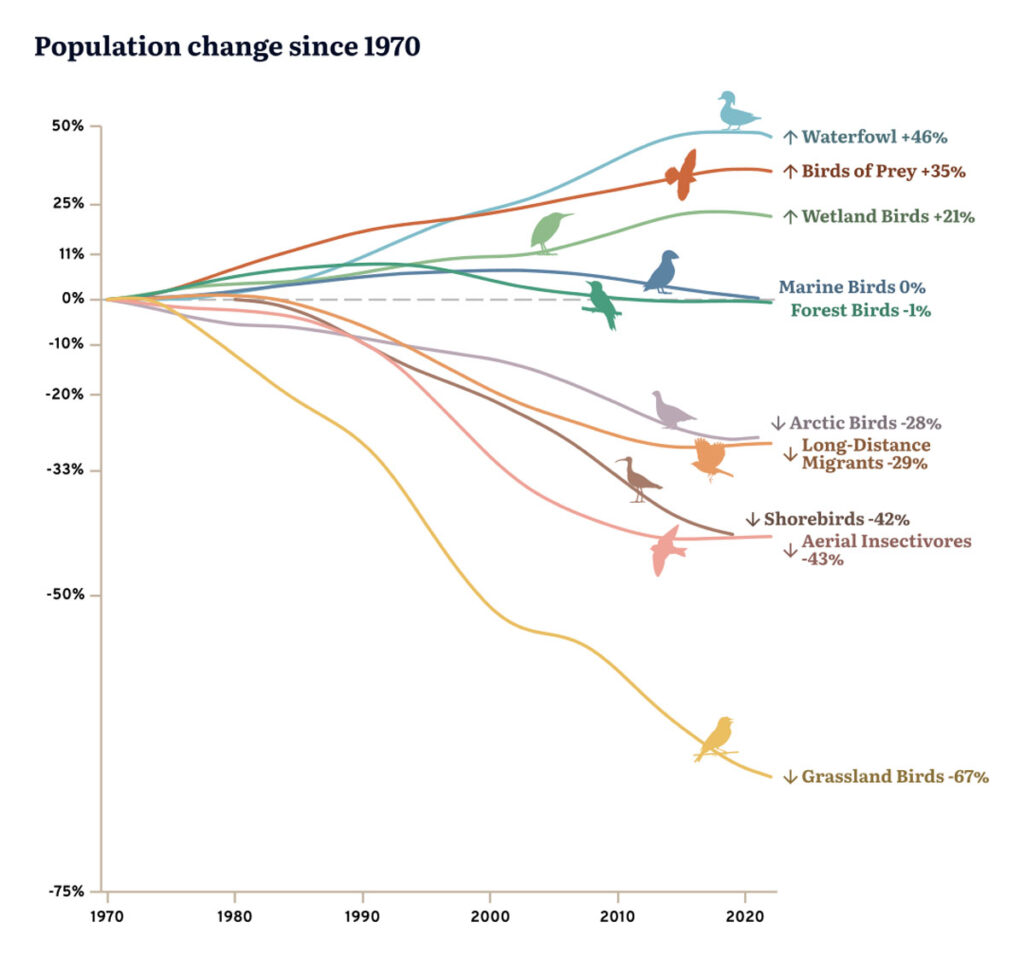
fragmentation impacting biodiversity. The overall intactness of 122 bird species in our watersheds was found to be 60% on average, as measured by the ABMI Biodiversity Intactness Index. Within our watersheds, areas like Canadian Forces Base Wainwright, parks and protected areas, and riparian zones along the Battle River show strong biodiversity, while other areas require further conservation efforts.
mportant Bird Areas (IBAs) are places that are significant for migrating birds and important for bird conservation. Miquelon Lake, Sounding Lake, Killarney, Dillberrry, & Leane Lakes, and Schultz Lake are some of the IBAs in our watersheds.
Riparian Condition
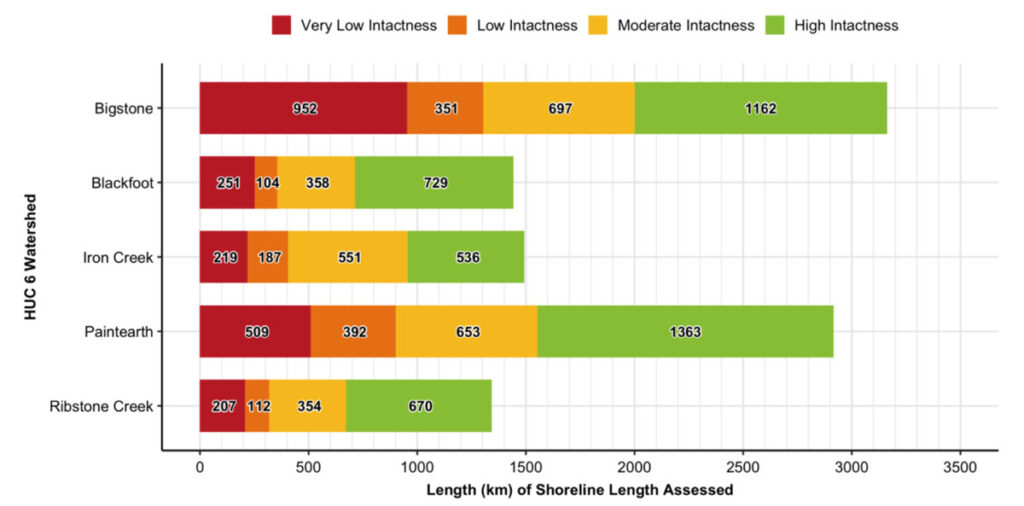
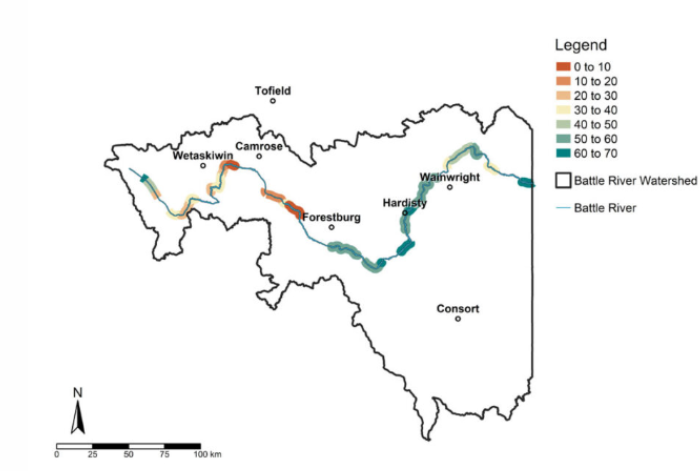
iparian areas, transition zones between land and water, are crucial for water filtration and biodiversity. They are assessed through on-the-ground surveys or satellite imagery. Broad-scale evaluation can help prioritize conservation and restoration efforts based on intactness levels.
View riparian data through the Riparian Web Portal at riparian.info
Fish Health
Fish are significant as a food source and indicator of overall watershed health, as land use pressures impact fish populations. Through a 2008 fish survey, the Battle River received a 42% Index of Biological Integrity (IBI) score. Other monitoring projects, such as Fall Index Netting at Pigeon Lake and the Askîy Fish Health Monitoring Program, highlight the need for further conservation of fish populations.
Call to Action
Conserve and restore wetlands and riparian areas
Protect healthy tree stands to support habitat connectivity
Naturalize your yard to protect native pollinators
Find native species for your region through ALCLA Native Plants or the Alberta Native Plant Council
Contribute to citizen science monitoring using iNaturalist and eBird
Connect the dots
How does this affect the rest of watershed health?
- Land management can positively or negatively impact biodiversity and ecosystems
- Wildlife and birds control pests
- Healthy tree stands provide habitat and have a cooling effect
- Rich deep soil offers carbon storage
- Riparian plants clean our rivers
- Bees and other pollinators contribute to food production
- Natural areas support recreation
- Climate change alters ecosystems, affecting species survival and the services they provide
Acknowledging Lands and People
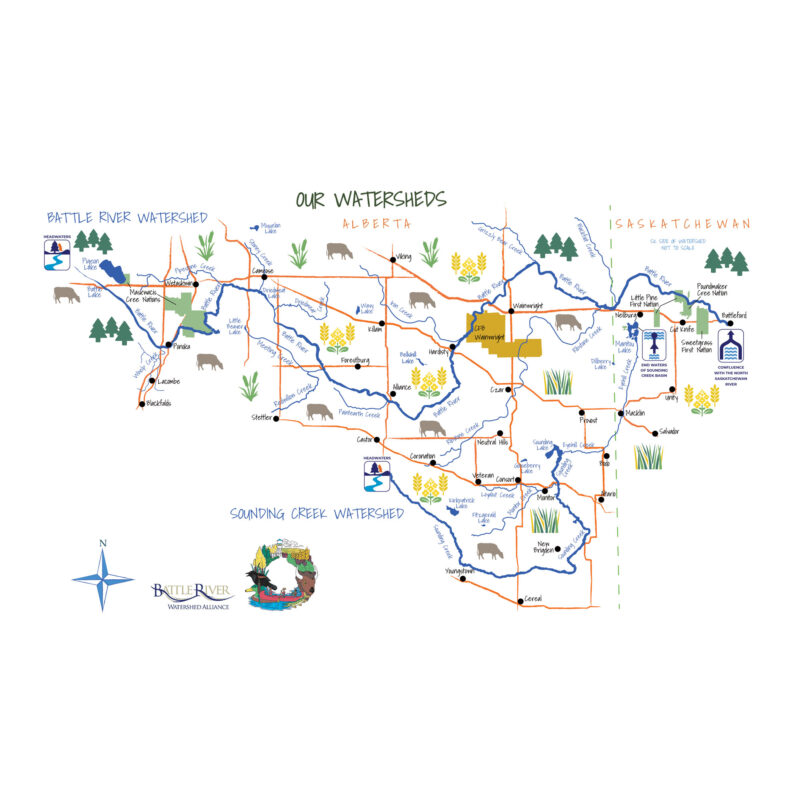
The Battle River and Sounding Creek watersheds have been the home, meeting ground and travelling route for many Indigenous Peoples since time immemorial. We gratefully acknowledge the ancestral territory and ongoing presence of Indigenous Peoples and Nations within these watersheds. Their experiences, teachings, knowledge and wisdom inform and enrich our collective efforts to care for the land and water of this region. These watersheds are located in Treaty 6 and 7 territory and the Métis homeland. Fulfilling the spirit and intent of the treaties is an ongoing process, and the Battle River Watershed Alliance is committed to building strong and respectful relationships with the Indigenous Peoples of this land, with all living beings, and with the land and water on which we all depend.