
Naturalize your Lawn to Protect Pollinators Print Version
By Ray Giles, Earth Day – April 22, 2026
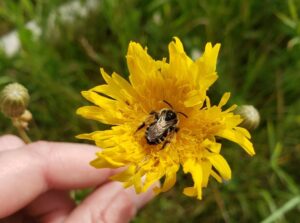 There are approximately three hundred and twenty species of bees in Alberta. Each one contributes to the pollination of plants, flowers and crops. Nearly a quarter of native bee species in Alberta are in decline while another quarter do not have sufficient data to determine the status of the population of the species. It is unclear why some bee species are in decline while others thrive but it’s a multi-faceted issue and one that can make us feel helpless given the importance these species have to human food production.
The Western Bumblebee (Bombus occidentalis) is what is known as a ‘buzz pollinator’. Buzz pollinators vibrate the pollen off of the plant by collecting the anther, the part of the plant that produces pollen, in it’s jaws and uses its flight muscles to vibrate the pollen off of the plant. The pollen collects on the bees fuzzy body and then the cycle continues as it flies off to the next flower. Buzz pollination is crucial to many crops found in backyard vegetable gardens such as peppers, tomatoes, and fruit trees. The western Bumblebee received a threatened status from the federal government in 2023.
Pollinators are not the only species struggling, many insects and invertebrates are experiencing population decline as the world becomes more urbanized and habitats become more fragmented.
Insects play an important role in ecosystems. They are important food sources for amphibians, birds, bats, reptiles and other animals. Many insect species also contribute directly to decomposition and play a vital role in the cross-pollination of plants. and many aquatic larval stages of insects can act as indicators of water quality.
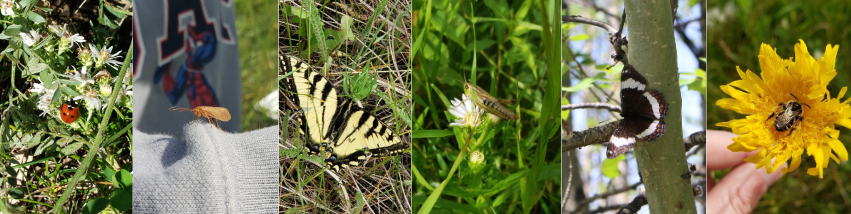
There is good news! You can make a difference and help preserve the insects in your community. One of the simplest ways to do this is to leave your leaves on your lawn in the fall and spring. This enhances biodiversity and food production locally as the leaves *provide important insulation for overwintering insects and larvae as well as shelter for other small organisms.
Wait, Don’t Clean Up Your Yard Yet!
Guidance for lawn care in the spring and fall from the Camrose Environment Sustainability Group
Lawn naturalization has been shown to increase insect and arthropod biodiversity while also supplying the animals that eat them with more shelter. Lawn naturalization can include replacing sod with native grasses, reducing the amount of lawn by increasing the size of flowerbeds that have native pollinator friendly plants, and creating no-mow zones to allow for the natural regeneration of native plants. Additionally you can leave small patches of bare soil, stumps and logs to shelter insects.
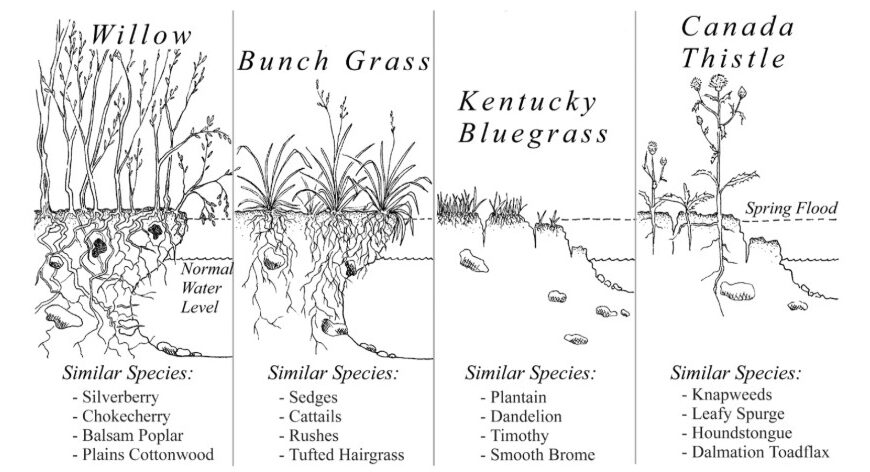 Naturalized lawns are not only good for bugs. Native plants often have long, sprawling root systems that filter pollutants out of groundwater and allow excess water to soak into the ground more readily, unlike Kentucky blue grass and other sod grasses that compact the ground and cause more surface water runoff. Lawn naturalization is a natural and effective way to prevent flooding and mitigate drought conditions. An added bonus is that having an established naturalized lawn can cut maintenance costs.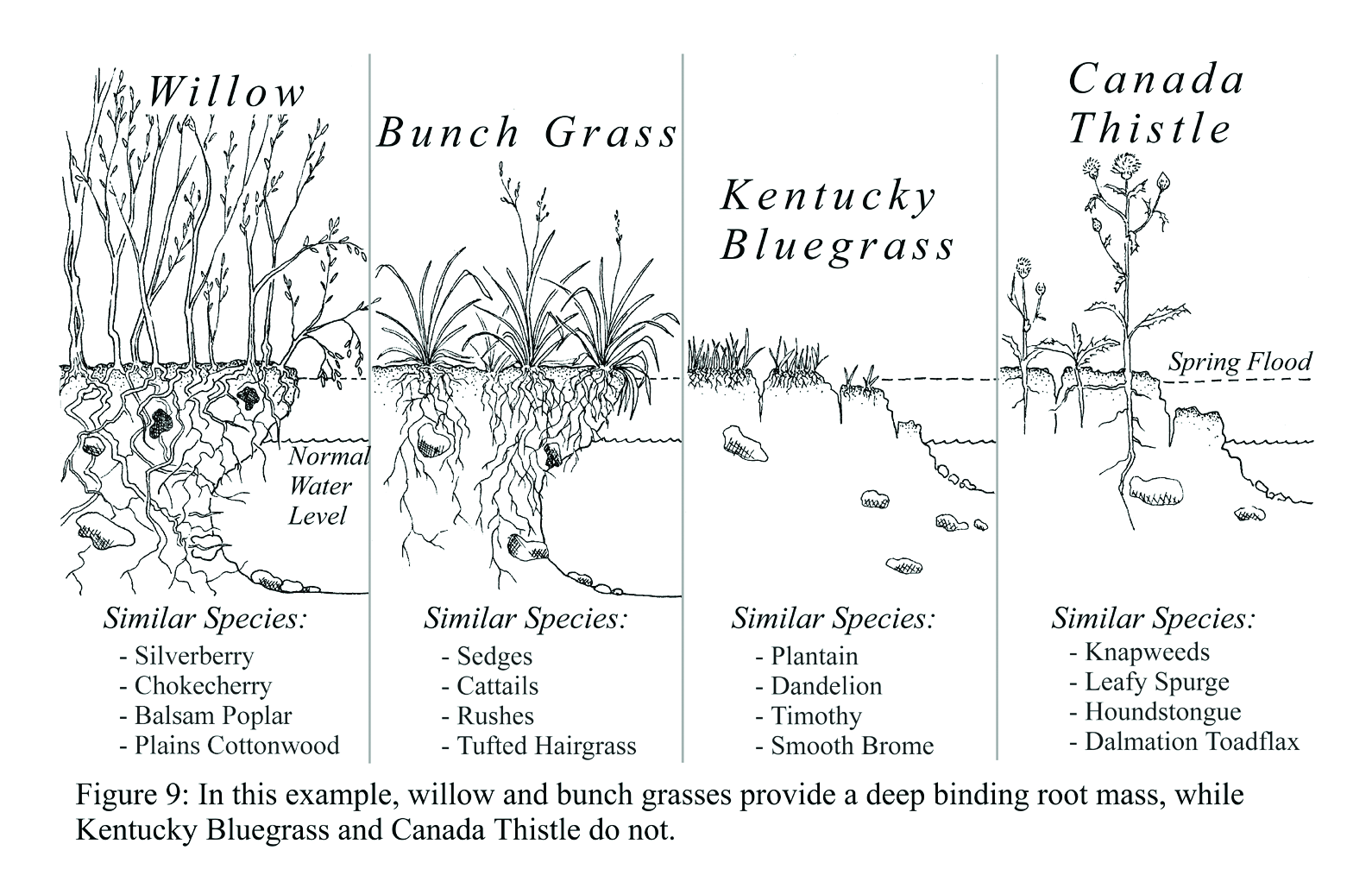
The first thing to consider before digging up your yard to put a rainwater garden or replacing your sod is safety. Be sure to confirm that there are no utility lines in your yard. Click before you dig is an online portal designed to make it easier for homeowners to locate lines.
Once you’ve started your project, it is important to utilize plants that are native to your area. This will make it easier for the plants to establish as well as providing arthropods with a familiar food source. If you’re unsure of which plants are native to your area, Alberta Native Plant Council has guides to native flowers and grasses and information about where to buy them among other resources that can help you get the most out of a naturalized lawn that will support insect pollinators and other arthropods in your neighborhood.
If you would like to learn more about our bees, check out the Alberta Native Bee Council.